How Georgia’s Ancient Tradition Inspires Ningxia, the Emerging Wine Region?

Leave a comment

Georgia’s 8,000-year unbroken clay winemaking tradition is an invaluable refernce for Ningxia.

Shota NATROSHVILI shared practical knowledge, “Georgia has a complete set of winemaking practices for clay vessels. There are specialised tools for cleaning; we use ash or mineral powder on the inner walls to prevent mould, and we dry them with blowers. These are techniques handed down through generations.”

Emma GAO, owner of Silver Heights, said, “Shota is from three generations of winemakers. The experience he shared with us is something we simply didn’t know. It’s been incredibly valuable.”https://www.vinosvivo.com/post/the-clay-convention-in-ningxia-can-an-8-000-year-old-georgian-qvevri-redefine-chinese-wine

La poésie de la fabrication des vins naturels

Leave a comment

À la Fabrique St-George, on fabrique des vins naturels. Ces vins sont faits sans levure artificielle et dans des qvevris provenant de la Géorgie.

Differences between Qvevri and Amphorae

Leave a comment

  • Although both are made from clay, there are significant differences that impact on labour
    and cost.
  • Qvevris are buried, resulting in consistent temperature. Amphorae are free-standing, so high
    external temperatures impact on amphorae, which have to be cooled down with water,
    coating the external surface. Not managing the external temperature in an amphorae cellar,
    can result in excessive evaporation from the vessels, leading to more oxidative flavour in the
    wine.
  • Qvevris are drained from above which necessitates pumps while amphorae are drained
    below with natural, gravitational filtering.
  • The thick, reinforced walls of Qvevri make them less likely to break, while amphorae are
    fragile. Winemakers often refer to accidents with forklifts.
  • The amphorae are lighter in weight and can be moved around. Qvevris are built into the
    ground of the cellar, which necessitates prior planning.
  • Qvevri whole-berry fermentation creates challenges to clean, due to working downwards and
    using specialized equipment. Amphorae are easier to clean as bottom drains aid in easy
    removal of pomace from the vessel.

https://domainegeorgia.wordpress.com/wp-content/uploads/2025/09/avoid-vessels-sa.pdf

End of the line! Everybody off!

Leave a comment

We thought for a moment that we may have reached our final destination. Yet, we did not hear the announcement at the end of our trip, when five years back we arrived in 2011 in Georgia. In the absence of any other information on our sleeper, we hurried off. We were welcomed by what felt like a celebratory polyphony in our ears « mravalijamieri, mravalijamieri, mravalijamieri… »! Has our journey ended here? For real…?

It is true that the road has been long since our exceptional encounter with Montrachet. No longer quite the upper class anymore, we left Burgundy for other destinations in France, in Spain, in Portugal, in Italy, etc… Admittedly, we gravitated more and more towards the East, until we arrived at this hidden gem! A country with an astonishing 525 varieties of good wine; where the « kvevri » (Georgian amphora) originated some 2,700 years ago.

However there were no sudden revelations to greet our presence in Georgia and its remarkable 69,700 km2 of terroir. The true eye-opener encounter was in Turkey during a stopover with Udo Hirsch, wine producer, photographer, archaeologist and a man of all trades in Cappadocia in 2014. Up to that point, we had mixed up the start and finish lines! Our story had just begun, just as the story of wine had, thousands of years back with the amphora. Our intuition has made a come back; we welcome it again and let us go together to search for the truth elsewhere!

We hope that the publication of this book « Journey in Amphora* », which is very dear to us, encourages others to put themselves forward and go on to make « The Wine » in terracotta. It is our most sincere wish.

To conclude our foreword, we would like to thank deeply all our friends who were involved in the making of this fabulous project, and more particularly Udo Hirsch, for his dissertation on earthen pots and Josep Roca for his introduction. We also thank Christine Biloré and Vanessa Thiernesse for their translations, Iago Bitarishvili for his contribution, Woino the publisher and the CEZANNE printing house, especially our friend Roberto de Pila. We would like to dedicate this book to them with love and loyalty above any commercial consideration. For the proof of it, we have written it in French, contrary to neoliberalism.

So now, are you ready to go on a trip? Great, passengers to the gates, arm doors please! Off we go!

Keiko & Maika

*What a beautiful term « Journey in Amphora »! It has been inspired by Agnès Henry-Hocquard from Le Domaine de la Tour du Bon in Brûlat du Castellet in the Var. Thank you Agnès for that beautiful expression that makes us dream of the Mediterranean!

Note: In this book, we shall also introduce some of the conventional producers with their clay pots and hope that one day they may join us in the biconditional world of « Amphora and Natural Wine ».

One of the unique properties of the Amphorae is that they breathe.

Leave a comment

Can you tell us how the oenologist can use the properties of terracotta to “concentrate” wine during maturation?

” Yes, by keeping the Amphorae in a temperature and humidity (low humidity) controlled environment the wall of the Amphora acts like a membrane, with the calcium in the clay acting to try to balance the water and oxygen between the 2 sides of the membrane, thus it carries water molecules out and oxygen in. In our Terracotta room this amounts to about 5% ullage per month for our whites and a little less for our reds and though our Pinot Gris, for example, loses 30% of its water content over 6 months, the Amphora is topped up regularly with ferment from the same vintage to minimize the chance of spoilage and to increase the flavours and aromas in the wine. It works very well”.

Qvevri Cleaning Tools

Leave a comment

https://www.sadmeli.com/qvevri

Krazana — A U-shaped scrubbing tool made from the roots. This tool is best suited for a large-capacity Qvevri; the worker climbs inside the vessel to clean the walls, using the two ends of the tool to scrub in a wide arc.​

Sartskhi — A scrubbing tool with a long handle that can reach deep inside the Qvevri. The head of the tool is a block made from layers of pressed cherry tree bark.​

Tagvisara — A brush-like tool made from the stiff twigs of the butcher’s-broom plant, an evergreen that grows throughout Georgia. The Tagvisara can come with or without a wooden pole attached. Workers use the handheld version when they climb inside a large Qvevri.​

Gviis Tsotskhi — A brush-like tool made from the branches of juniper bushes. Like the Krazana, this tool is used inside a large-capacity Qvevri, which a worker climbs inside to clean.​

Orchkhushi — A scrubbing tool made from a bundle of corn husks bound togetherand lashed to a wooden pole like a stiff mop.​

Matsatsuri — An absorbent cloth attached to a wooden pole that soaks up any water remaining at the bottom of a Qvevri after it has been thoroughly rinsed and emptied.​

Ochiora — A long wooden board with a hole in its center used in conjunction with a long-handled Sartskhi or Orchkhushi tool. After placing the cleaning tool in the Qvevri, a worker lays the Ochiora across the opening of a buried Qvevri, fitting the tool’s handle through the board’s center hole. Two additional holes on opposite ends of the board let workers stake it into the ground to hold it secure. The board protects the rim of the Qvevri from being damaged by the handles of cleaning tools.

Tava amphoras . New solution.

Leave a comment

Melyo

Cleaning and sanitizing have always played a critical role in winemaking processes. This is especially the case when using amphorae or wine vessels made of ceramic materials, given that the porous surfaces are particularly subject to contamination and therefore more difficult to clean effectively.

Precisely to meet this need, and thanks to its extensive experience with ceramics, Tava has developed Melyo, an enzymatic detergent. Together with its specific protocol for use, Melyo enables winemakers to easily achieve excellent results in cleaning and sanitizing amphorae, while avoiding the use of hazardous substances from a chemical standpoint.

Alentejo Vinho de Talha, amphora & ‘Pote de Barro’ wines

Leave a comment

DOC Vinho de Talha rules introduced in 2010 aim to preserve core traditions.  They provide that:

  • the grapes must be de-stemmed;
  • the fermentation must be undertaken in impermeable pots (‘talha’);
  • the wine and the skins must remain in talha until November 11th (St. Martin’s day); and
  • the grapes must be sourced from (and permitted by) Alentejo’s DOC sub-regions (Borba, Évora, Granja-Amareleja, Moura, Portalegre, Redondo, Reguengos and Vidigueira).

I’ve been entranced by talha wines since my 2015 visit with traditional and contemporary talha wine makers, reported in two posts, here and here.  It is worth emphasising that there can be a world of difference between the two (which I have categorised separately below), additionally between Vinho de Talha DOC wines and those wines (let’s call them hybrid) which ferment in talha without skins or on skins but only for a short period.

Typically made by producers whose bread and butter is mainstream wines, contemporary talha/amphora styles tend to be fresher, with more refined phenolics/tannins.  Benchmark Vinho de Talha DOC examples have texture and layer thanks to skin contact.  And they are capable of great finesse in the right hands and the right pot!  Check out my Decanter report here on Portugal’s most expensive wine release – Herdade do Rocim Jupiter Code 01 2015.   Whilst friendly, entry level contemporary Vinho de Talha and ‘hybrid’ examples can be a little too ‘clean’ and less interesting for it.

Conversely, the more traditional styles from dedicated talha makers now bottling their wines can tip into oxidative and lack freshness and/or detail.  But the best are spicy and multi-layered.  Technically trained winemakers are, perhaps, better able to hedge against losing purity and freshness without losing personality or ‘soul.’  Treading the line brilliantly, XXVI Talhas are a case in point.

As this tasting demonstrated, quality and style is varied within each category.  The different grapes, terroir and pots themselves (clay density, porosity, size and condition) influence the resulting wines and, where bottling these wines is a relatively new development, inevitably producers are still finding their way.

If you are interested to find out more, the Alentejo Wine Commission has published a terrific guide with video interviews about the history and evolution of talha wines here.

The chapter about talha wines in Simon Woolf’s and Ryan Opaz’s new book, ‘Foot Trodden, Portugal and The Wines That Time Forgot,’ is a great read on the traditional culture of (unbottled) talha wines.

The Centro Interpretativo do Vinho de Talha opened at Praça 25 de Abril 11-14, Vila de Frades, in 2020 to lead visitors through the history, culture and process of talha winemaking.  Moves are afoot to reinforce the culture and tradition of talha wines yet further by applying for UNESCO Intangible Heritage Cultural status.

Last September, a group of producers independently established the Association of Vinho de Talha Producers (APVT) to protect and promote traditional talha wines with their own seal of identity and quality.  You will see ‘APVT’ alongside the names of producer members below.

Characterization of the Oxygen Transmission. Qvevri, Concrete, Stonewear

Leave a comment

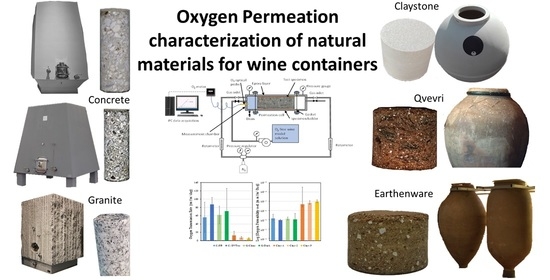
Today, there is a trend in enology promoting a return to the use of old natural materials for the manufacture of storage and maturation wine tanks. One of the most sought-after characteristics of these materials is their permeability to oxygen from the atmosphere to improve wines without this being a harmful process. The reference performance in wine aging is, without doubt, the oak barrel for its ability to oxidize wines in a controlled way, thus improving them. It would be possible to mature wines in containers in which the use of wood is not obligatory, as opposed to aging in oak barrels or foudres. This work presents the results of oxygen permeation analysis under test conditions typical of a tank containing wine, using materials, such as concrete and granite. The oxygen permeability of the materials tested was very diverse, typical of natural materials. The results showed that earthenware presents an excessive permeability, not only to atmospheric oxygen, but also to liquids and needs treatment before being used in liquid containers. Claystone and concrete can be impermeable to liquids, but maintain permeability to atmospheric oxygen—making them candidates for use in permeable tanks for wine maturation. Finally, granite has some very interesting characteristics, though thickness control is required when calculating the desired oxygen transmission rate. View Full-Text

THE NATURAL CRADLE OF YOUR WINE

Leave a comment

STONEWARE JARS FOR AGING AND WINEMAKING

With a lower porosity than terracotta, the Stonware is particulary suitable for white and delicate red wines, crystalline wine, delicacy aromas.

https://www.vinetterre.com/wine-jar-stoneware-sphero

Sphero

From 600 to 1000L

STONEWARE JARS FOR AGING AND WINEMAKING

Salt glaze stoneware

The salt glaze finishing on the outside only makes cleaning easy and does not change the porosity.

  • Uprightness, minerality, freshness, purity
  • Delicacy and lightness
  • Respect of the varietal and quality of the fruit
  • Authenticity of aromas
  • Stainless steel valve
  • Silicon bung with or without hole
  • Stainless steel pallet

https://static.wixstatic.com/media/78d9c7_b8aae12dcb6840a7ae41ec3399b1a9b7~mv2.jpg/v1/fill/w_569,h_564,al_c,q_80,usm_1.20_1.00_0.01/amphore-sphero-GRAND-gres-vin-et-terre_j.webp

Older Entries

Create your own website, free on WordPress.com.Create your own website.
Start free